
Non-Airline Aviators
Navigating mental health, substance use, DUI history, and other complex FAA medical certification issues

Who Is a Non-Airline Aviator?
A non-airline aviator is anyone who requires an FAA medical certificate but operates outside the guidance of an airline and is not a union member. This includes a broad and diverse community of aviators and aviation professionals.
Student & General Aviation Private Pilots
Before applying for your first medical, pursuing flight training , building hours, or flying for personal travel .
Part 91 & 135 Commercial & CFI Pilots
Flight instructors and commercial pilots flying charter, cargo, or Part 91 and 135 corporate operations.
Drone & Agricultural Pilots
UAS operators and ag pilots who need medical clearance for their specialized missions.
Air Traffic Controllers
ATC professionals who hold FAA medical certificates and face the same certification complexities as pilots.
This also includes pilots who have been terminated by an airline due to a DOT-positive drug test and now need to navigate the reinstatement process independently, without union or airline support.
What This Resource Covers
This section of Medical Certification Help is designed specifically for non-airline aviators navigating FAA medical certification within these categories. This is specialized guidance…
Mental Health Diagnoses
With or without medication, including SSRI pathways and psychiatric evaluations.
Substance Use History
Past or current substance use concerns and HIMS program requirements.
DUI / Alcohol Offenses
Past or current alcohol-related driving offenses and how the FAA evaluates them.
Deferrals & Special Issuance
Understanding FAA deferrals, Special Issuance processes, and how to respond to FAA letters.
Quick Links
Substance Use
Mental Health
Who This Is For…
You've been told "this might be complicated"
You're worried about making the wrong move
(At anytime before applying for a medical you have recevied ANY mental health diagnosis from a medical provider (including substence use disorder, anxiety, depression, ADD/ADHD)
An AME has mentioned deferral, HIMS, or Special Issuance
You have a DUI or alcohol-related history and aren't sure how the FAA will view it
You've answered "yes" to certain questions on the MedXPress 8500-8
You want to understand consequences before acting
Why This Exists…
FAA medical certification is a regulatory process, not traditional healthcare. Non-airline aviators with complex histories, accurate information is the most powerful tool you have.
This resource exists… To prepare you to make informed decisions that will affect the length of time it takes to get a special issuance medical reduce harm through education and informed decision-making. You are not behind. You are right where you need to be.
👉 Start Here: Understanding the System Before You Act
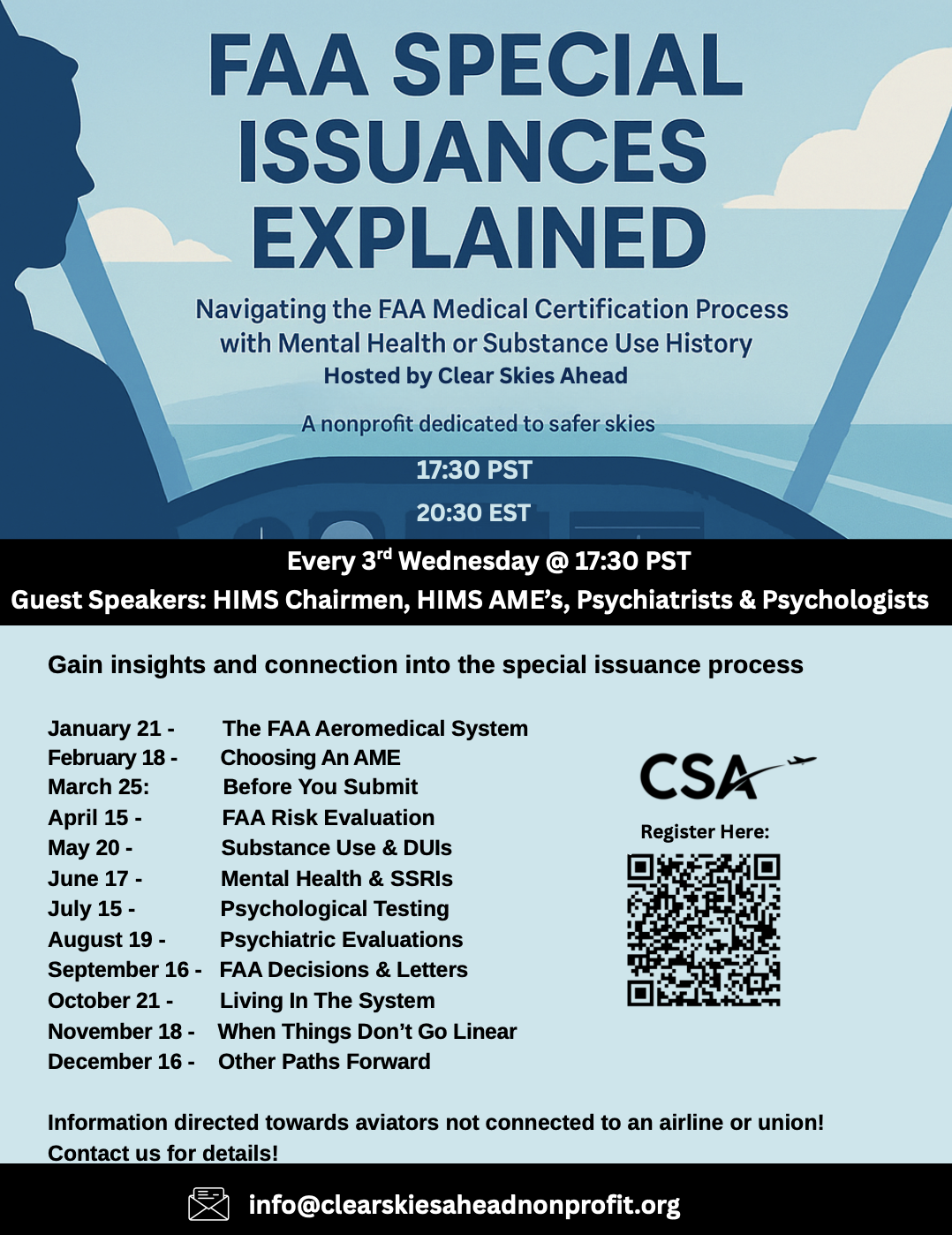
Webinars Are The Third Wednesday Of Each Month:
20:30 ET / 17:30 PT
Monthly Webinar Series
Frequently Asked Questions
Still have questions? Take a look at the FAQ or reach out anytime.
For more information contact:
stephanie@clearskiesaheadnonprofit.org
452-478-7638
-
This series is designed for non-airline aviators (general aviation, student pilots, independent commercial, instructional, recreational, future pilots, and air traffic controllers) who are facing FAA medical certification issues, including mental health history, substance use, neurological concerns, or prior deferrals or denials.
-
No. This series focuses on understanding the FAA medical system, not guaranteeing outcomes. The goal is to help participants make informed, strategic decisions and avoid common mistakes that lead to unnecessary delays, costs, or loss of options.
-
No. This series is educational, not a substitute for professional care or legal advice. It helps you understand how the system works so that future interactions with AMEs, clinicians, or consultants are better informed and more effective.
-
Because order matters in FAA medical certification. Once information enters the FAA system, it usually cannot be removed. Acting without understanding the system—especially early—can unintentionally escalate a case or eliminate alternatives.
-
Yes. In fact, this series is especially valuable before submitting MedXPress or scheduling an exam. Several sessions focus on early decisions, control points, and how to protect options before paperwork begins.
-
Yes. Later sessions explain how the FAA responds to cases, how to interpret letters, what monitoring and renewals involve, and how to manage the process over time—including setbacks, step-downs, and reissuance.
-
No. The series does not discourage treatment. Clear Skies Ahead encourages aviators to seek help and put health and well-being first. It emphasizes informed decision-making, helping participants understand how care, documentation, and disclosure interact with FAA requirements.
-
Part 121 airline pilots must follow the guidance of their airline and union. This information is focused on non-airline aviators, who don't have access to structured employer and union support. However, you may gain something from the information provided.
-
Yes. Dedicated sessions explain psychological, neuropsychological, and psychiatric evaluations, including what they are, why the FAA uses them, how results are framed, and what makes reports usable versus problematic.
-
Yes. The final sessions address alternate paths such as BasicMed, and Sport Pilot/MOSAIC considerations, timing decisions, and how to think about identity and purpose beyond the FAA medical process.
Adam Banks —Denise Connell — Stephanie Day — Kevin Gieseke — Tami Halloran — Morten Kroge —Tanya Kroge
Webinar Team Contributors
Disclaimer: Educational resource. Policies and processes change—always verify current FAA guidance and work with a HIMS‑trained AME.